
Genetic Screening with NIPT and Structural Visualization with Ultrasound
Many expectant parents feel overwhelmed by the battery of tests offered during pregnancy. Chief among the questions is often the difference between NIPT and Ultrasound screening. It’s crucial to understand that these two common forms of fetal testing are not substitutes for one another; rather, they are complementary tools that provide distinct pieces of information about the baby’s health.
The Non-Invasive Prenatal Test (NIPT) is a powerful form of genetic screening. This simple maternal blood test analyzes fragments of the baby’s DNA to assess the risk of specific chromosomal conditions, such as Down Syndrome (Trisomy 21).
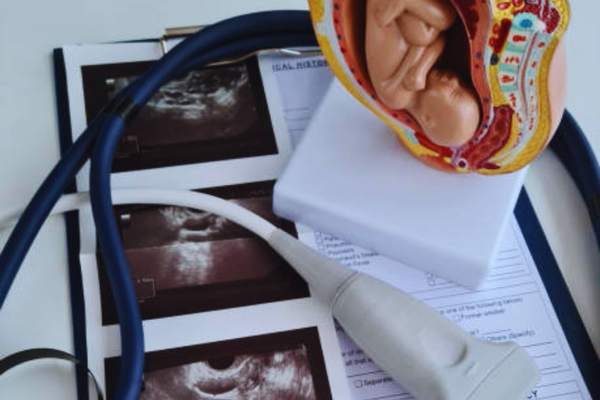
Conversely, the Ultrasound uses high-frequency sound waves to create live images, allowing clinicians to visually inspect the baby’s physical development, fetal growth, and identify any structural abnormalities.
A comprehensive approach to prenatal screening requires the dual perspective offered by NIPT and Ultrasound together, ensuring a complete and multifaceted assessment of the baby’s well-being.
Understanding NIPT: A Simple Maternal Blood Test for Chromosomal Conditions
The Non-Invasive Prenatal Test (NIPT) has been a transformative advancement in prenatal screening. Available as early as 10 weeks, it is a remarkably simple procedure: a standard maternal blood test taken from the expectant mother’s arm.
Because this method is safe and carries zero risk to the fetus, it quickly became the preferred initial step for many in assessing chromosomal conditions.
The science behind NIPT is fascinating. During pregnancy, tiny fragments of the baby’s DNA—known as Cell-Free Fetal DNA (cfDNA)—pass from the placenta into the mother’s bloodstream. The NIPT test isolates and analyzes these fragments to count the number of copies of specific chromosomes.
This is primarily a tool for Aneuploidy Screening, which targets the most common trisomies: Down Syndrome (Trisomy 21), Trisomy 18 (Edwards syndrome), and Trisomy 13 (Patau syndrome). An extra copy of any of these chromosomes usually results in severe developmental or health issues.
Beyond the core trisomies, many NIPT panels also screen for Sex Chromosome Aneuploidies (like Turner or Klinefelter syndromes) and specific Microdeletions (tiny missing pieces of DNA) that are associated with other syndromes.
The test’s high detection rate (often exceeding 99% for Trisomy 21) gives it superior accuracy compared to older serum screening methods.
However, an expert perspective requires acknowledging its limitation: NIPT is a Screening Test, not a Diagnostic Test. It reports the probability or risk of a condition existing. If the result is reported as high-risk, a definitive Diagnostic Test (like amniocentesis or CVS) is needed for confirmation.
Crucially, the insight gained from NIPT and Ultrasound are frequently combined. The NIPT provides the genetic likelihood, while the follow-up Ultrasound can visually check for associated structural abnormalities, making the entire fetal testing process more robust.
The Role of Ultrasound: Visualizing Fetal Anatomy and Growth
While NIPT provides essential insight into the baby’s genetic risk, the Ultrasound remains the indispensable method for assessing physical development.
An Ultrasound, often called a Sonogram, is a non-invasive imaging technique that uses sound waves to create live, moving pictures of the fetus inside the womb. These images allow clinicians to evaluate fetal viability, determine the accurate gestational age, and identify fundamental structural abnormalities.
Ultrasound plays several critical roles early in pregnancy. Initially, an early scan confirms the location and number of fetuses (important for NIPT accuracy) and verifies the baby’s heartbeat. Later in the first trimester (between 11 and 14 weeks), the Nuchal Translucency (NT) Scan is often performed.
This specialized Ultrasound measures the fluid at the back of the baby’s neck—an indicator or soft marker associated with certain chromosomal conditions (like Down Syndrome) and, crucially, Fetal Heart Defects.
The second major Ultrasound is the comprehensive Anatomy Scan, typically performed around 20 weeks. This is where the majority of structural abnormalities and Fetal Malformations are detected.
The sonographer systematically checks the baby’s brain, heart, spine, limbs, kidneys, and facial features. Finding a structural problem, such as Spina Bifida, is an outcome that NIPT alone cannot provide.
This is why doctors insist on using NIPT and Ultrasound in tandem. The NIPT addresses genetic risk; the Ultrasound provides the physical blueprint.
Even with a low-risk NIPT result, the Ultrasound remains vital because it screens for non-chromosomal congenital defects that require completely different monitoring and management strategies. The combination of NIPT and Ultrasound ensures a truly comprehensive picture of fetal health.
Why You Need Both NIPT and Ultrasound: The Power of Complementary Testing
The clinical recommendation for the use of NIPT and Ultrasound together is based on the simple fact that each test covers blind spots left by the other. Expectant parents gain maximum confidence in the results when both genetic and structural data align. Without this dual approach, the prenatal screening process is incomplete.
What NIPT Misses
While the NIPT is remarkably accurate for the major trisomies, its analytical scope is narrow. It focuses on the number of chromosomes and selects Microdeletions, leaving the vast landscape of physical development unaddressed. NIPT cannot, for example, detect most Structural Abnormalities like gastroschisis (bowel outside the body), isolated cleft lip, or many cardiac abnormalities.
These Fetal Malformations are structural, not necessarily genetic, and require the direct visualization provided by the Ultrasound. A low-risk NIPT result only tells you that the probability of conditions like Down Syndrome is low; it offers no guarantee that the baby’s organs and physical structures are forming correctly.
What Ultrasound Misses
Conversely, the Ultrasound’s limitation lies in its inability to see the cfDNA itself. An Ultrasound may show a visually normal fetus, but this does not rule out the presence of a chromosomal condition. Many babies with genetic disorders do not display overt physical soft marker abnormalities visible on the scan, especially early in the pregnancy.
Relying solely on the Ultrasound would mean missing a significant portion of genetic risk, which is precisely where NIPT excels.
The Synergy of NIPT and Ultrasound
The true power of this dual strategy lies in its synergy. If a high-risk NIPT result is reported, the Ultrasound immediately becomes a critical tool for detailed evaluation, searching for associated structural findings that may support the genetic risk, or, conversely, suggesting the finding is a False Positive.
Furthermore, the Ultrasound is necessary to ensure the pregnancy meets the necessary criteria for the NIPT blood draw, verifying fetal viability and accurate gestational age.
The combination of NIPT and Ultrasound provides the most robust and trustworthy assessment available to guide medical decisions, including whether to pursue more invasive options like CVS or Amniocentesis (Diagnostic Testing).
NIPT and Ultrasound Timeline: Integrating Tests into Your Prenatal Care
Integrating NIPT and Ultrasound into your prenatal screening schedule ensures timely and accurate results, allowing for proactive care. The earliest key milestone is the NIPT, which can be performed starting at 10 weeks of gestational age.
This is when enough cfDNA from the fetus is typically circulating in the maternal bloodstream for reliable Aneuploidy Screening.
Shortly after, between 11 and 14 weeks, the first comprehensive Ultrasound takes place, often including the Nuchal Translucency (NT) Scan. This scan not only confirms viability and dating but also looks for early soft marker and structural abnormalities.
The second major checkpoint is the 20-week Anatomy Scan (Ultrasound). This is the detailed structural exam that rigorously screens for Fetal Malformations.
If the combined results from NIPT and Ultrasound indicate a high risk or an abnormal finding, the next step involves meeting with a genetic counselor and possibly pursuing Diagnostic Testing such as Amniocentesis or CVS for definitive answers. The coordinated timing of NIPT and Ultrasound is essential for effective fetal testing management.
Common Questions for Expectant Parents (FAQ)
Can NIPT replace the need for an Ultrasound?
This is a common misconception. No, NIPT does not replace the necessity of routine Ultrasound scans. NIPT is a powerful genetic screening tool used for Aneuploidy Screening (like Down Syndrome) by analyzing cfDNA. Ultrasound, however, is the only method that provides visual confirmation of fetal viability, accurate measurement of gestational age, and a thorough inspection for structural abnormalities and Fetal Malformations. To gain a complete picture of the baby’s health, combining NIPT and Ultrasound is standard clinical practice.
What if my NIPT is low-risk, but my Ultrasound shows an issue?
If your NIPT result indicates a low risk for the tested chromosomal conditions but your Ultrasound shows a potential issue (like a heart defect or skeletal problem), clinicians focus on the structural anomaly. Many structural abnormalities are not caused by the genetic issues screened for by NIPT. In this scenario, the Ultrasound finding may prompt a referral for specialized scans or Diagnostic Testing (Amniocentesis or CVS) to investigate non-aneuploidy-related genetic disorders or isolated physical defects.
How accurate is NIPT compared to the Nuchal Translucency (NT) Scan?
For the specific purpose of screening for Trisomy 21 (Down Syndrome), NIPT is significantly more accurate, with detection rates exceeding 99%. The Nuchal Translucency (NT) Scan, which is itself a specific type of Ultrasound, is typically part of a combined first-trimester screening and has a lower detection rate. However, the NT Scan remains vital because an increased soft marker measurement is a strong indicator of potential Fetal Heart Defects or other structural abnormalities that NIPT would miss. The maximum benefit of fetal testing is achieved when utilizing both precise genetic data from NIPT and ultrasound visualization.
If both tests are normal, can I be assured my baby is perfectly healthy?
A combination of low-risk NIPT and Ultrasound results offers a very high degree of reassurance regarding the most serious genetic and structural issues. However, no prenatal screening test can guarantee a baby will be born completely healthy. Both tests are screening tools that look for known, specific risks. They cannot detect all rare genetic disorders or every possible congenital abnormality. Ongoing fetal growth monitoring throughout the remainder of the pregnancy remains essential.