


The Truth About Paternity DNA Testing: Facts vs. Fiction
When facing uncertainty about a child’s biological father, the desire for clear, definitive answers is paramount. Fortunately, modern paternity DNA testing offers scientifically accurate results with unparalleled certainty.
Yet, this essential process is often clouded by persistent myths—misinformation that can create unnecessary worry and sometimes delay resolution. As experts in genetic verification, we frequently encounter the same five common misconceptions about DNA paternity tests.
These falsehoods, ranging from invasive sample collection methods to questions about the final 99.99% result, simply do not align with current laboratory standards. This guide is designed to cut through the fiction.
We will address these myths head-on, clarifying exactly how reliable paternity testing works today and providing the necessary facts you need to achieve genuine peace of mind and move forward with confidence.
Myth 1: Paternity DNA Testing Requires Painful Blood Samples
The idea that a paternity DNA test must involve a needle is perhaps the most common misconception, primarily perpetuated by older methods and dramatic television portrayals. While blood draws were once the standard, that is no longer the case.
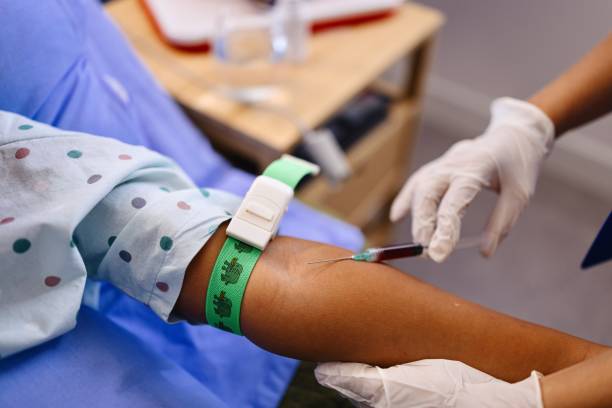
The Fact: The standard, post-birth method for modern paternity DNA testing is remarkably simple and completely non-invasive: the cheek swab.
This painless technique, also known as a buccal swab, involves gently rubbing a cotton or polyester swab on the inside of the cheek. This collects thousands of buccal epithelial cells, which are a rich source of DNA—the same genetic material found in blood cells.
Since the DNA is identical regardless of the collection method, the cheek swab is just as accurate as a blood test for a standard paternity test. It is highly preferred due to its safety and convenience for individuals of any age, including newborns.
It’s critical to note the one exception: Non-Invasive Prenatal Paternity (NIPP) testing. Because the laboratory must isolate fetal DNA that naturally circulates in the pregnant mother’s bloodstream, a blood sample from the mother is required.
However, even in this scenario, the alleged father only provides a cheek swab. Overall, the belief that paternity DNA testing requires painful blood is obsolete, making the process easily accessible to anyone seeking clarity.
Myth 2: At-Home DNA Paternity Tests Aren’t Reliable or Accurate
Many people question, “Is a home paternity test accurate?” The widespread belief that a test purchased online or at a pharmacy is somehow scientifically inferior is a pervasive myth. This often stems from confusion regarding the use of the results, not the testing procedure itself.

The Fact: The science behind a reputable home paternity test is identical to a court-ordered one.
When you send your DNA samples—collected via those easy-to-use cheek swabs—to the lab, the technicians analyze the exact same number of genetic markers (known as STR markers or loci). The comparison of alleles and the calculation of the Combined Paternity Index (CPI) and Probability of Paternity (PoP) follow the same stringent scientific protocols.
For a responsible, high-quality DNA paternity testing service, the home paternity test accuracy is universally reported at 99.99% or higher for an inclusion (confirmation of fatherhood) and 100% for an exclusion.
The 99.99% Question: This high percentage is a statistical necessity, not a measure of uncertainty. A 100% score would only be possible if the lab could compare the DNA profile against every other man on the planet, which is impossible. Therefore, 99.99% means the tested man is virtually certain to be the biological father.
The real difference lies in the chain of custody. For the results of a paternity DNA testing to be considered legally valid, the collection must be witnessed and documented. A peace of mind test performed at home lacks this strict documentation, which is why it’s not court-admissible, but it is still fundamentally accurate for personal knowledge.
Always choose a lab with internationally recognized standards, such as AABB accreditation, to ensure the highest reliability for your paternity testing.
Myth 3: You Must Wait for Birth for Paternity DNA Testing
A common source of stress when dealing with a potential paternity issue is the belief that a definitive answer must wait until the baby is born. This notion is outdated and incorrect. The question, “Can you do a paternity test while pregnant?” has been answered with a resounding “yes” by modern genetic science.
The Fact: Today, paternity DNA testing can be conducted safely and reliably through Non-Invasive Prenatal Paternity (NIPP) testing, often starting as early as seven weeks into the pregnancy.
The technology is built on a simple biological truth: trace amounts of the fetus’s DNA naturally circulate in the pregnant mother’s bloodstream. The NIPP procedure is completely non-invasive to the pregnancy, as it only requires a blood sample from the mother and a cheek swab from the alleged father.
The laboratory then carefully isolates the cell-free fetal DNA from the maternal blood and compares its genetic markers to the father’s sample.
Unlike older, riskier procedures like amniocentesis or CVS, the modern NIPP test carries zero risk to the mother or the fetus. This major advancement in genetic technology has provided a safe and reliable path to securing answers early.
For those who seek certainty before birth, this form of prenatal paternity testing offers an accurate solution, proving that the waiting period for definitive paternity DNA testing is no longer required.
Myth 4: DNA Paternity Testing is Too Expensive for Families
The financial burden of testing is a significant deterrent for many, leading to the widespread myth that DNA paternity testing is prohibitively expensive. This generalization is flawed because it fails to account for the multiple levels of paternity testing available.
The Fact: The actual paternity test cost varies drastically depending on the purpose and the level of legal scrutiny required.
There are three main categories, and two are highly accessible. The most affordable option is the home paternity test (or peace of mind test). Because you collect the samples yourself and there is no legal oversight, the cost is significantly lower, typically ranging from $130 to $200. These tests provide the same scientific accurate results as any lab test and are perfect for personal certainty.
Conversely, a legal paternity test—which provides court-admissible DNA test results for issues like child support, custody disputes, or immigration—is indeed more expensive.
The higher paternity test price (often $300 to $500) is not due to advances in DNA analysis, but rather to the need to maintain a strict chain of custody. This involves professional sample collection at a certified facility, verification of identity via photo ID, and thorough documentation.
The third, and most expensive, is the Non-Invasive Prenatal Paternity test, which requires specialized technology and typically starts around $1,500.
Ultimately, the choice dictates the expense. If you simply need an accurate answer for yourself, the myth of excessive cost is easily overcome by choosing the appropriate paternity DNA testing service for your needs.
Myth 5: Paternity Tests Are Only Used for Legal Cases and Court
The final common myth is that a paternity test is exclusively a tool of the legal system, only used for formal proceedings like establishing child support or resolving custody disputes. This belief overlooks the most fundamental reason people choose DNA paternity testing.
The Fact: While a legal paternity test is essential for court, the majority of paternity testing is sought for personal clarity.
The primary driver for a paternity DNA test is the desire for peace of mind. Individuals and families use these non-invasive tests for personal certainty, to understand family history, or simply to confirm a biological relationship privately.
The informational DNA paternity testing process is intentionally private and confidential, delivering results directly to the tested parties without any public record or court filing. Therefore, if you are not seeking a court-admissible outcome, the vast majority of paternity testing options are designed specifically for personal knowledge, proving that its utility extends far beyond the courtroom.
Conclusion
We have successfully debunked the most damaging myths surrounding paternity testing. The reality is that modern paternity DNA testing no longer requires painful blood draws; post-birth tests rely on highly accurate, non-invasive cheek swabs.
Home tests provide reliable, accurate results for personal certainty, and prenatal paternity testing is a safe option for early answers. Furthermore, the cost and legal procedures vary based only on your specific requirements, making accurate DNA paternity testing accessible to nearly everyone.
Don’t let old falsehoods dictate your path toward resolution. The facts empower you to make an informed decision and gain definitive peace of mind regarding the biological identity of a child.
FAQ
Why is my Paternity DNA testing result 99.99% and not 100% accurate?
The probability of paternity is calculated using statistics that compare the tested father’s genetic markers to a sample population pool. A 100% result would require testing every male on earth with a similar ethnic background, which is impossible. A result of 99.99% or higher is considered conclusive exclusion of all other men and is universally accepted as proof of a biological relationship.
Does a legal paternity test require blood, or can a cheek swab be used?
For a post-birth legal paternity test, a cheek swab (buccal swab) is the industry standard and is equally accurate to a blood sample. The key requirement for a legal test is the strict chain of custody—meaning the sample must be collected by an impartial third party at an approved facility to ensure the integrity and verification of the identity of all tested individuals.
How much does a Paternity DNA testing cost difference between a peace of mind test and a legal test?
The paternity test cost varies significantly. A “peace of mind” or home paternity test is the most affordable option, typically ranging from $$$130 to $$$200. A legal paternity test costs more, usually between $$$300 to $$$500, reflecting the extra cost of the mandated professional sample collection, verification, and extensive chain of custody documentation required for court admissibility.